Despite metros being a very safe mode of transport, any incident, however rare, can attract significant public attention and erode trust. The study examines passenger safety incidents within stations, focusing on vertical circulation (escalators and stairs) and platform-train interface gaps. It builds upon findings from COMET’s Safety Performance Indicator (SPI) analysis using additional member contributions to identify trends, underlying causes, and effective strategies for reducing the risk of passenger safety incidents.
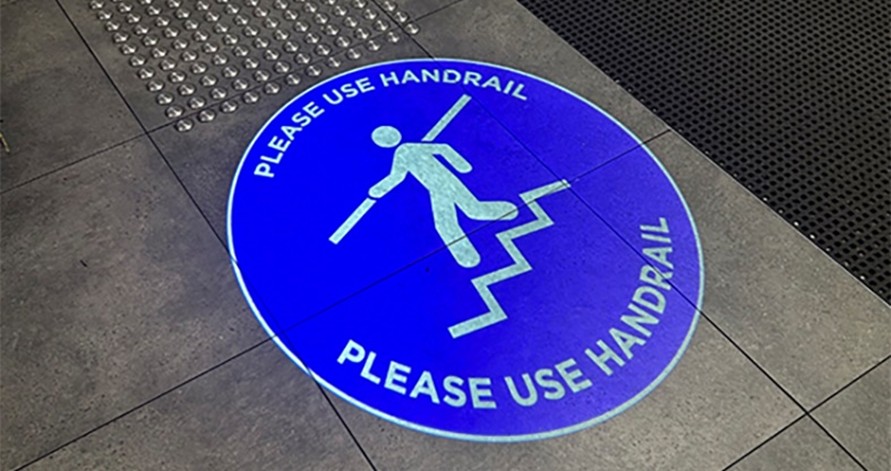
Example image of gabo light projection at Sydney Metro
The three-part scope of this case study covered escalator availability, safety and asset management. Firstly, the study explored definitions and targets for escalator availability and identify causes of, and solutions to, unavailability. Secondly, it identified low-cost practices to improve safety. Finally the study benchmarked escalator asset lives and the nature of maintenance interventions during the lifecycle.
Long-term actions that metros have taken to improve escalator availability are the operational and maintenance practices either to reduce failures from occurring or to restore availability as quickly as possible after escalators go out of service. This involves proactive maintenance work to ensure that escalators are in good condition during passenger service hours, and working with maintainers to optimise their response and supply chain.
Regarding escalator asset management, it is important to adopt a whole-life approach and assess maintenance approaches on this basis, considering the annualised cost of ownership, whole-life unavailability caused by maintenance, the scope and frequency of maintenance interventions throughout the lifecycle, and the customer-facing unavailability caused by maintenance.
Our site uses functional and strictly necessary cookies only. For more details on the cookies we use, please see our cookie notice.